
When the countdown clock hits zero at Cape Canaveral or the Kennedy Space Center, something extraordinary happens. A SpaceX rocket launch is no longer just a government-led spectacle; it has become a routine yet awe-inspiring event that marks the new era of commercial spaceflight. Founded by Elon Musk in 2002, SpaceX has redefined what it means to reach orbit, turning the fiery ascent of a Falcon 9 or the massive Starship into a global phenomenon. Understanding the intricacies of a SpaceX rocket launch requires a deep dive into the technology, the phases of flight, the launch sites, and what the future holds.
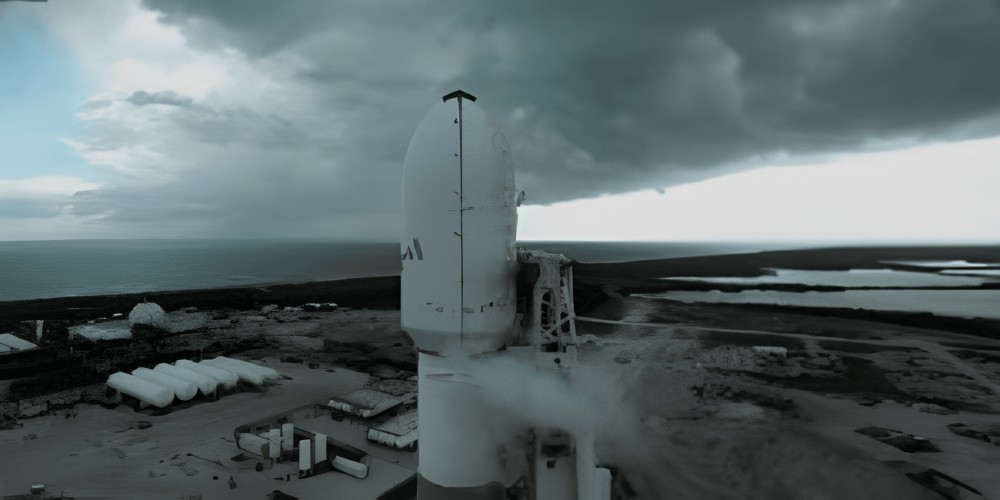
Each SpaceX rocket launch is a carefully orchestrated ballet of engineering and physics. The preparation begins weeks in advance, with the rocket horizontal inside an integration hangar. For a Falcon 9, the workhorse of the fleet, the first stage is mated to the second stage, and the payload—whether it be Starlink satellites, a lunar lander, or a crew Dragon capsule—is encapsulated within the protective fairing. The vehicle then rolls out to the launch pad aboard a specialized transporter-erector. The excitement builds as propellant loading commences. Unlike older rockets that used exotic fuels, a SpaceX rocket launch relies on a refined kerosene known as RP-1 and liquid oxygen, both of which are chilled to cryogenic temperatures to increase density and performance. The sight of heavy vapor clouds rolling away from the rocket during fueling is a signature visual cue that a SpaceX rocket launch is imminent.
The first crucial moment of any SpaceX rocket launch is engine ignition. The Falcon 9’s nine Merlin 1D engines produce over 1.7 million pounds of thrust at sea level. Three seconds before liftoff, the engines roar to life in a staggered sequence, a process known as a soft start. Computers monitor thousands of parameters. If anything is off-nominal, the computer can halt the SpaceX rocket launch in the final second. Once the clamps release, the vehicle rises slowly, then accelerates with a fury that pushes astronauts against their seats at three times the force of gravity. The sound is not just heard but felt—a deep, crackling roar that rolls across the Florida marshlands and vibrates through the chests of spectators miles away.
Approximately one minute into the flight, the rocket passes through Max Q, the point of maximum aerodynamic pressure. This is the most stressful moment structurally for any SpaceX rocket launch. To survive, the engines automatically throttle back slightly, reducing stress on the airframe. Once past Max Q, the vehicle throttles back up, punching through the upper atmosphere. Two minutes and thirty seconds after liftoff, the first stage’s nine engines cut off in a sequence called MECO, or Main Engine Cut Off. At this point, the magic of a modern SpaceX rocket launch truly reveals itself: stage separation.
Stage separation is a marvel of simplicity and reliability. Pneumatic pushers shove the first and second stages apart. The second stage’s single Merlin Vacuum engine, optimized for the void of space, ignites to carry the payload to orbit. Meanwhile, the first stage begins its descent back to Earth. This is the feature that separates a SpaceX rocket launch from all others. The booster flips in mid-air using cold gas thrusters, then reignites three of its engines in a boostback burn to reverse its course. It re-enters the atmosphere at supersonic speeds, using four titanium grid fins to steer. Finally, a single-engine landing burn slows it to a hover just above a drone ship in the Atlantic Ocean or a concrete pad back at the launch site. Watching a SpaceX rocket launch booster land successfully on a moving ship never gets old, even after dozens of repetitions.
While the first stage returns home, the second stage continues its work. For a typical Starlink mission, the second stage performs a circularization burn about six minutes after launch, inserting its payloads into a low Earth orbit. Then comes the deployment sequence. A single SpaceX rocket launch can deploy sixty or more small satellites at once, each released by a spinning motion that uses centripetal force. For crew missions, the second stage is jettisoned before re-entry, and the Crew Dragon capsule takes over. The entire ascent from launch to orbit takes less than ten minutes, but the planning involves years of simulations.
SpaceX has revolutionized not just launch vehicles but also launch sites. The primary locations for a SpaceX rocket launch include Launch Complex 39A at the Kennedy Space Center in Florida, originally used for Apollo and the Space Shuttle. SpaceX has leased and modernized this historic pad. Another site is Space Launch Complex 40 at Cape Canaveral Space Force Station. On the West Coast, Vandenberg Space Force Base in California hosts a SpaceX rocket launch for polar orbits. Most recently, SpaceX built Starbase in Boca Chica, Texas, which serves as the development and launch site for the massive Starship system. Each site has unique infrastructure: integrating towers, flame trenches to divert the rocket’s exhaust, and water deluge systems that spray thousands of gallons to dampen acoustic energy and protect the pad.
One cannot discuss a SpaceX rocket launch without addressing the payload. Falcon 9 and Falcon Heavy launch everything from national security satellites for the US Space Force to private lunar landers. The most visible payloads are the Crew Dragon capsules carrying astronauts to the International Space Station. A crewed SpaceX rocket launch adds layers of complexity: the escape system must be armed, the life support activated, and the astronauts strapped into custom seats. The launch escape system, which uses the capsule’s own SuperDraco thrusters, is designed to pull the crew away from an exploding rocket at any point from the pad to orbit. This system has been tested successfully, proving that a SpaceX rocket launch can be safer than any American rocket before it.
The economics of a SpaceX rocket launch have shifted the entire industry. Before SpaceX, launching a satellite cost hundreds of millions of dollars, and rockets were expendable. SpaceX introduced the concept of reusability as a business model. The first stage of a Falcon 9 can fly up to twenty times with refurbishment between flights. Some boosters have launched and landed more than fifteen times. Reusability reduces the cost of a SpaceX rocket launch to approximately sixty-seven million dollars for a new booster, and even less for a flight-proven one. Competitors like United Launch Alliance and Arianespace have scrambled to develop their own reusable rockets in response. The low cost has enabled new markets, including global internet constellations like Starlink, which would have been impossible without cheap, frequent access to space.
However, a SpaceX rocket launch is not without risks and failures. The company has experienced several high-profile anomalies. In 2015, a Falcon 9 broke apart two minutes into flight due to a strut failure in the second stage’s liquid oxygen tank. In 2016, another rocket exploded on the pad during fueling for a pre-launch test. More recently, the Starship integrated flight tests have ended in spectacular explosions over the Gulf of Mexico. Each failure, however, is treated as a data-gathering exercise. SpaceX practices rapid iteration: they build quickly, test to destruction, and fix the issue. This contrasts sharply with the old aerospace model of years of simulation. The transparency of a failed SpaceX rocket launch, livestreamed to millions, has earned the company a loyal following.
The future of the SpaceX rocket launch is dominated by Starship. Standing at 120 meters tall, Starship is the most powerful rocket ever built. Its Super Heavy booster has thirty-three Raptor engines burning liquid methane and liquid oxygen. A fully reusable Starship rocket launch aims to carry up to 100 metric tons to the surface of the Moon or Mars. NASA has selected Starship as the human landing system for the Artemis program. The first orbital test flight of Starship occurred in April 2023, ending in a controlled explosion after stage separation failed. Subsequent test flights have shown progress, including successful landings of the Super Heavy booster in mid-2024. When a Starship rocket launch finally succeeds in full reusability, it will drop the cost per kilogram to orbit below ten dollars, a revolutionary shift comparable to the transition from propeller aircraft to jets.
Spectators travel from all over the world to witness a SpaceX rocket launch. The best viewing locations include the Saturn V Center at Kennedy Space Center, Playalinda Beach, and the causeway along the Indian River. A night launch is particularly dramatic: the rocket’s exhaust turns night into day, and the rumble arrives seconds after the light. SpaceX also provides high-definition livestreams of every major mission, complete with onboard camera views from the first stage during re-entry. The company’s culture of openness means that even a scrubbed SpaceX rocket launch—cancelled due to weather or technical glitch—is broadcast and explained in real time.
Weather plays a critical role for any SpaceX rocket launch. The 45th Weather Squadron at Cape Canaveral issues forecasts that consider lightning, anvil clouds, cumulus clouds, and upper-level winds. Falcon 9 can launch in light rain and moderate winds, but a lightning strike could be catastrophic. SpaceX has built lightning towers at each pad to dissipate strikes, but the decision to scrub a SpaceX rocket launch often comes down to the risk of violating weather rules. Scrubs are common and can delay a mission for days. For crew launches, the weather must be acceptable not only at the launch site but also at multiple abort locations across the Atlantic. This adds another layer of difficulty.
Environmental considerations have become increasingly important. A single SpaceX rocket launch burns hundreds of tons of propellant, releasing carbon dioxide and water vapor. However, kerosene also produces soot. SpaceX has moved toward methane for Starship, which burns cleaner. The company also contends with habitat disruption. Launch pads are often near wildlife refuges. SpaceX has funded studies on the impact of sonic booms on manatees and sea turtles. The noise of a SpaceX rocket launch can be heard over twenty miles away, and the blast zone temporarily displaces birds. Yet the environmental footprint per kilogram to orbit is smaller for reusable rockets than for single-use systems, since less manufacturing waste is produced per launch.
The regulatory environment for a SpaceX rocket launch has grown more complex. The Federal Aviation Administration licenses every commercial launch. For Starship, the FAA required dozens of environmental mitigations before granting a license. These included changes to the water deluge system, limits on launch windows, and third-party monitoring of debris. SpaceX has sometimes chafed at regulatory delays, but compliance is mandatory. The pace of a SpaceX rocket launch in 2024 reached over one hundred missions per year, a cadence that no other entity has ever achieved. Managing that many launches requires automated range safety systems, real-time telemetry processing, and coordination with air traffic control to clear a massive restricted airspace.
Payload integration is another fascinating aspect of a SpaceX rocket launch. For rideshare missions, SpaceX offers a service called Smallsat Rideshare, where customers can book a spot on a Falcon 9 for as little as one million dollars. The company stacks multiple payloads on a single port side of the second stage, using a custom deployment mechanism. For larger commercial satellites, SpaceX provides a payload adapter that attaches to the top of the second stage. Crew missions require carefully controlled environments inside the Dragon capsule. No matter the payload, the integration process ends with the fairing closing around the cargo. The fairing halves are themselves recovered from the ocean and reused, another cost-saving measure unique to a SpaceX rocket launch.
The human experience of a crewed SpaceX rocket launch is intense but brief. Astronauts train for months on the procedures. They suit up in pressure suits designed to be elegant and functional. They ride a Tesla Model X to the launch tower, an iconic image of the modern space age. Inside the Crew Dragon, they strap into carbon-fiber seats with touchscreen displays. The ride from ignition to orbit takes eight to ten minutes. During a SpaceX rocket launch, astronauts experience three to four Gs. The view through the windows is a blurred mess of flame and vibration, then suddenly, silence and weightlessness. The Dragon separates from the second stage, and the capsule begins its free flight. For those inside, the difference between a safe launch and disaster is less than a millimeter of circuitry functioning correctly.
Public interest in a SpaceX rocket launch remains high because each mission carries a sense of purpose. Starlink launches aim to provide global broadband, bridging the digital divide. Crew missions keep the International Space Station staffed. Scientific missions like the SWOT satellite or the Europa Clipper rely on SpaceX’s heavy lift capability. Even entertainment has a role: the Inspiration4 mission, which launched a fully civilian crew into orbit for three days, showed that a SpaceX rocket launch could be accessible to private individuals willing to pay. The Polaris program promises the first private spacewalk using SpaceX suits. These missions transform the SpaceX rocket launch from a purely governmental activity into a shared human adventure.
Finally, it is essential to understand that the success rate of a SpaceX rocket launch is among the highest in history. As of 2025, the Falcon 9 and Falcon Heavy have achieved over three hundred successful flights in a row. The Merlin engine has proven itself incredibly reliable. The only recent failures have involved the experimental Starship program. This reliability has allowed SpaceX to become the dominant launch provider for Western nations. The US military, NASA, and private companies like Intelsat all compete for slots on a SpaceX rocket launch manifest. The company’s integrated supply chain, with most components built in Hawthorne, California, ensures quality control.
In conclusion, a SpaceX rocket launch is far more than a simple blast off. It is a demonstration of reusability, cost efficiency, and iterative engineering. From the pre-dawn fueling at Cape Canaveral to the triumphant landing of a booster on a drone ship, every phase of flight is designed to push boundaries. The company has made space accessible, turning the once-rare event of an orbital launch into a weekly occurrence. Whether carrying Starlink satellites, astronauts, or a potential Mars-bound Starship, the SpaceX rocket launch stands as the defining technological achievement of the early twenty-first century. As humanity looks toward the Moon and beyond, the ascents of these gleaming white rockets will continue to inspire generations to come, proving that the sky is not the limit but only the beginning.
Short FAQs About SpaceX Rocket Launches
Q1: How often does a SpaceX rocket launch occur?
A SpaceX rocket launch now happens approximately once every four days on average. In 2024, the company completed over ninety launches, and the cadence is increasing with improved booster turnaround times.
Q2: What is the most powerful SpaceX rocket launch to date?
The most powerful SpaceX rocket launch is the Starship integrated flight test. The Super Heavy booster produces over sixteen million pounds of thrust, making it twice as powerful as the Saturn V moon rocket.
Q3: Can I watch a SpaceX rocket launch in person?
Yes. Public viewing areas at Kennedy Space Center Visitor Complex, Jetty Park, and Playalinda Beach in Florida offer excellent sight lines. Check the official SpaceX launch schedule for dates, as all times are subject to weather and technical changes.
Q4: What happens if a SpaceX rocket launch fails?
If a SpaceX rocket launch fails, the automated flight termination system destroys the rocket to prevent debris from endangering populated areas. The company conducts a thorough investigation with the FAA, corrects the root cause, and returns to flight.
Q5: How much does a SpaceX rocket launch cost for a customer?
A standard Falcon 9 SpaceX rocket launch costs approximately sixty-seven million US dollars for a new booster. Reused booster missions cost slightly less. Rideshare slots can be as low as one million dollars for small satellites.
Q6: Is a SpaceX rocket launch safe for astronauts?
Yes. The Falcon 9 and Crew Dragon system has a proven safety record with multiple successful crewed missions to the International Space Station. The launch escape system can pull astronauts away from an exploding rocket at any point during ascent.
Q7: Why does a SpaceX rocket launch sometimes get delayed?
Delays occur due to upper-level winds, lightning risk, rough seas in the booster landing zone, technical issues with ground systems, or range conflicts with other launches. A scrub is a routine part of launch operations.
Q8: Does a SpaceX rocket launch pollute the environment?
Like all rockets, a SpaceX rocket launch emits combustion products. Kerosene fuel produces carbon dioxide and soot, but methane-fueled Starship burns cleaner. The overall environmental impact per kilogram of payload is lower for reusable rockets than for expendable ones.
Leave A Comment
0 Comment